Why every sourcing decision ends up in a spreadsheet?

Emmanuel Velasquez
•
Why every sourcing decision ends up in a spreadsheet?
Emmanuel Velasquez
•
Why every sourcing decision ends up in a spreadsheet?
Emmanuel Velasquez
•
Introduction
Your ERP is not a procurement tool. It's an accounting tool.
This is not a criticism. ERPs are exceptional at what they were designed to do: record transactions, process invoices, manage supplier master data, close the books. SAP, Oracle, Netsuite - all extraordinarily good at capturing what happened after you decided. The audit trail is clean. The PO is traceable. The invoice matches.
They were never designed for the decision itself. And that distinction matters more than most procurement teams realise.
The moment ERPs go dark
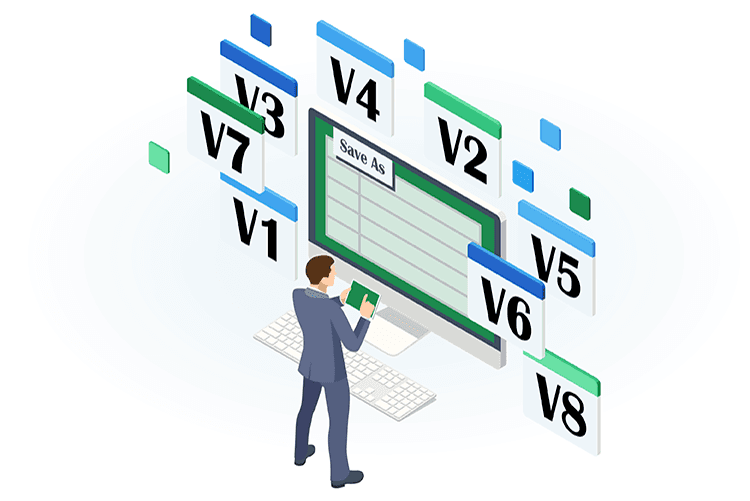
Think about what actually happens when you open a sourcing event. You have a BOM with 60 line items, quotes from four suppliers with different price breaks and MOQs, a target cost set by engineering, and a deadline. Your ERP can store the result of that process. It cannot help you run it.
The optimisation: which supplier gets which parts, at what quantities, respecting which constraints, at what total BOM cost happens in a spreadsheet. Every time. In every company. Because no ERP module has ever solved that problem.
This is not a missing feature. It is a missing category. ERPs were architected around the ledger: every data model, every workflow, every report flows from the transaction. There is no room in that architecture for a question like "what should we pay?" or "which combination of suppliers minimises total cost while respecting lead time constraints?" Those questions live before the transaction. The ERP only wakes up after it.
But the real problem runs deeper than that
An ERP has no concept of what you should have paid. Only what you did pay.
No target price. No market reference. No view of what was left on the table. It cannot tell you that your BOM cost 12% more than it needed to because three components were never competitively sourced. It cannot surface that a supplier has been quietly raising prices 4% per quarter while you weren't watching. It cannot show your CFO that procurement created value this year because it has no baseline to measure value against.
This is structural, not a gap that a new module or better configuration will fix. A system built to record transactions will always be silent on the question of whether those transactions were good ones. Savings require: a reference a target, a benchmark, a market price. Your ERP has none of those. It has a ledger.
Procurement teams that rely on their ERP as their primary tool end up managing spend. Teams that work with a decision engine on top of it end up reducing it.
What a decision engine actually does
It runs constraint-based scenarios before you commit. It benchmarks the price you're being quoted against what the market has actually offered not what you paid last year. It captures the rationale behind every decision so it can be justified to finance and improved next time.
ERPs tell you what you decided. Siembra helps you decide and gives you the data to prove you decided well.
Introduction
Your ERP is not a procurement tool. It's an accounting tool.
This is not a criticism. ERPs are exceptional at what they were designed to do: record transactions, process invoices, manage supplier master data, close the books. SAP, Oracle, Netsuite - all extraordinarily good at capturing what happened after you decided. The audit trail is clean. The PO is traceable. The invoice matches.
They were never designed for the decision itself. And that distinction matters more than most procurement teams realise.
The moment ERPs go dark
Think about what actually happens when you open a sourcing event. You have a BOM with 60 line items, quotes from four suppliers with different price breaks and MOQs, a target cost set by engineering, and a deadline. Your ERP can store the result of that process. It cannot help you run it.
The optimisation: which supplier gets which parts, at what quantities, respecting which constraints, at what total BOM cost happens in a spreadsheet. Every time. In every company. Because no ERP module has ever solved that problem.
This is not a missing feature. It is a missing category. ERPs were architected around the ledger: every data model, every workflow, every report flows from the transaction. There is no room in that architecture for a question like "what should we pay?" or "which combination of suppliers minimises total cost while respecting lead time constraints?" Those questions live before the transaction. The ERP only wakes up after it.
But the real problem runs deeper than that
An ERP has no concept of what you should have paid. Only what you did pay.
No target price. No market reference. No view of what was left on the table. It cannot tell you that your BOM cost 12% more than it needed to because three components were never competitively sourced. It cannot surface that a supplier has been quietly raising prices 4% per quarter while you weren't watching. It cannot show your CFO that procurement created value this year because it has no baseline to measure value against.
This is structural, not a gap that a new module or better configuration will fix. A system built to record transactions will always be silent on the question of whether those transactions were good ones. Savings require: a reference a target, a benchmark, a market price. Your ERP has none of those. It has a ledger.
Procurement teams that rely on their ERP as their primary tool end up managing spend. Teams that work with a decision engine on top of it end up reducing it.
What a decision engine actually does
It runs constraint-based scenarios before you commit. It benchmarks the price you're being quoted against what the market has actually offered not what you paid last year. It captures the rationale behind every decision so it can be justified to finance and improved next time.
ERPs tell you what you decided. Siembra helps you decide and gives you the data to prove you decided well.
Introduction
Your ERP is not a procurement tool. It's an accounting tool.
This is not a criticism. ERPs are exceptional at what they were designed to do: record transactions, process invoices, manage supplier master data, close the books. SAP, Oracle, Netsuite - all extraordinarily good at capturing what happened after you decided. The audit trail is clean. The PO is traceable. The invoice matches.
They were never designed for the decision itself. And that distinction matters more than most procurement teams realise.
The moment ERPs go dark
Think about what actually happens when you open a sourcing event. You have a BOM with 60 line items, quotes from four suppliers with different price breaks and MOQs, a target cost set by engineering, and a deadline. Your ERP can store the result of that process. It cannot help you run it.
The optimisation: which supplier gets which parts, at what quantities, respecting which constraints, at what total BOM cost happens in a spreadsheet. Every time. In every company. Because no ERP module has ever solved that problem.
This is not a missing feature. It is a missing category. ERPs were architected around the ledger: every data model, every workflow, every report flows from the transaction. There is no room in that architecture for a question like "what should we pay?" or "which combination of suppliers minimises total cost while respecting lead time constraints?" Those questions live before the transaction. The ERP only wakes up after it.
But the real problem runs deeper than that
An ERP has no concept of what you should have paid. Only what you did pay.
No target price. No market reference. No view of what was left on the table. It cannot tell you that your BOM cost 12% more than it needed to because three components were never competitively sourced. It cannot surface that a supplier has been quietly raising prices 4% per quarter while you weren't watching. It cannot show your CFO that procurement created value this year because it has no baseline to measure value against.
This is structural, not a gap that a new module or better configuration will fix. A system built to record transactions will always be silent on the question of whether those transactions were good ones. Savings require: a reference a target, a benchmark, a market price. Your ERP has none of those. It has a ledger.
Procurement teams that rely on their ERP as their primary tool end up managing spend. Teams that work with a decision engine on top of it end up reducing it.
What a decision engine actually does
It runs constraint-based scenarios before you commit. It benchmarks the price you're being quoted against what the market has actually offered not what you paid last year. It captures the rationale behind every decision so it can be justified to finance and improved next time.
ERPs tell you what you decided. Siembra helps you decide and gives you the data to prove you decided well.