Recover 2% of lost purchases through contract-quote control automation.

Emmanuel Velasquez
•

Recover 2% of lost purchases through contract-quote control automation.
Emmanuel Velasquez
•
Recover 2% of lost purchases through contract-quote control automation.
Emmanuel Velasquez
•
Recover 2% of lost purchases through contract and quote control automation.
The Challenge
A company in the electronics sector faced a recurring issue in managing its purchases: the difficulty of systematically comparing purchase orders (POs) with the framework contracts signed with its suppliers.
The purchasing teams placed orders throughout the year with the same suppliers, often in operational urgency. In practice, the verification of consistency between contractual conditions (prices, volume discounts, billing conditions) and the POs was done manually, on a case-by-case basis.
The purchasing manager was aware of the limitations of this approach:
A process heavily dependent on individuals, hence a source of errors
Controls carried out only on the largest amounts
Approximately 80% of orders were never checked due to time constraints
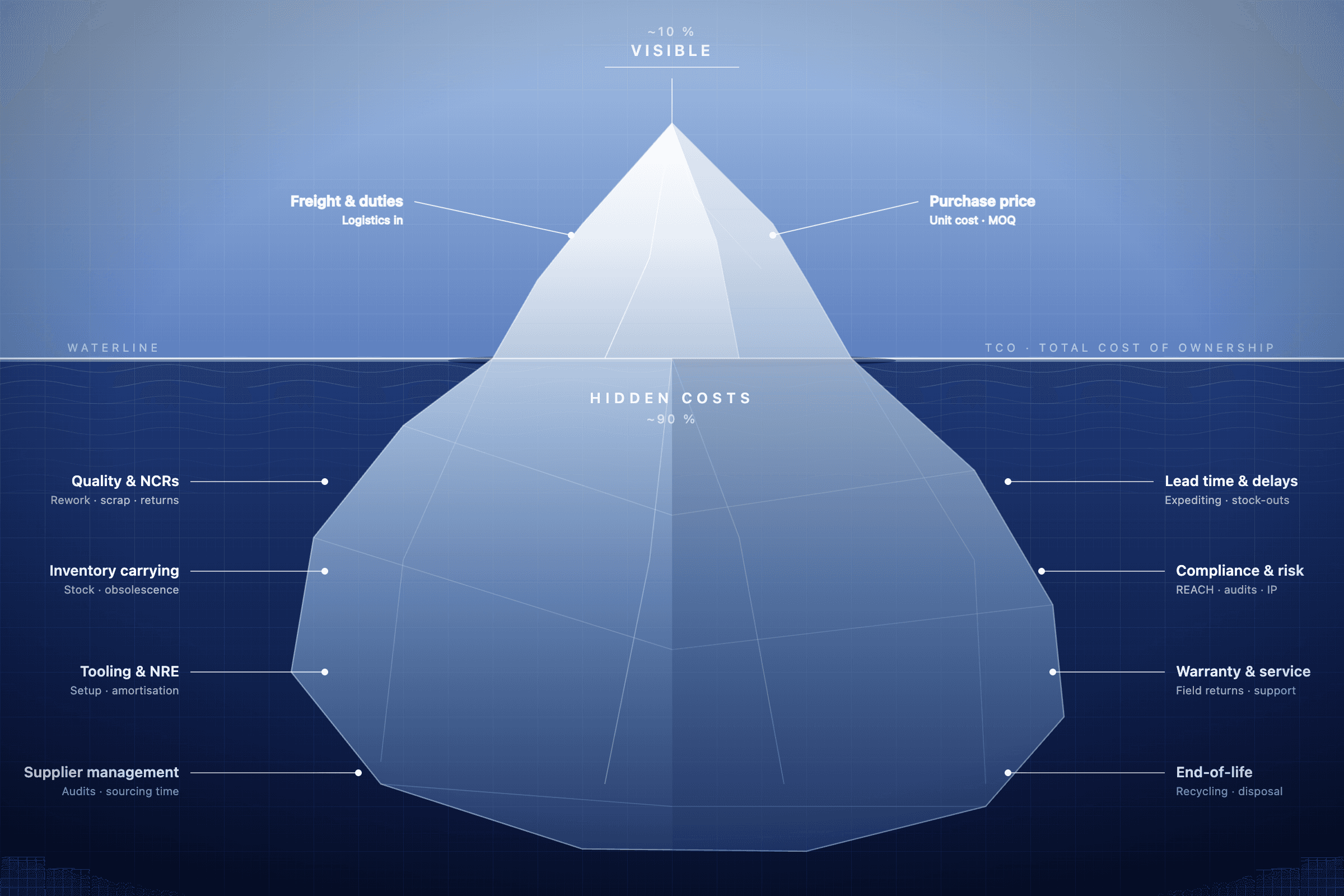
This situation exposed the company to invisible financial losses, as well as a risk of contractual non-compliance.
The Challenge
The company engaged Siembra to conduct a targeted diagnosis of its purchasing practices.
The aim: to quickly identify if there were discrepancies between supplier contracts and the issued purchase orders.
The diagnosis revealed a clear observation:
Approximately 2% of the purchasing volume analyzed was impacted by discrepancies
These discrepancies mainly arose from:
unapplied volume discounts
price errors
billing inconsistencies
Following this diagnosis, Siembra deployed its platform to:
Systematize the comparison between contracts and POs
Establish a continuous and automated workflow for control
Detect discrepancies in real-time, before they impact billing
Move from a one-off control approach to a robust and sustainable process
The Impact
The project allowed the purchasing team to transform the way they work:
Highlighting significant savings that were previously unseen
Drastic reduction in the risk of human error
Analyses that took hours are now carried out in a few moments
Shifting from reactive control to proactive management of contractual commitments
Beyond financial gains, the company strengthened the reliability of its purchasing processes and the trust in its data.
— Emmanuel
Recover 2% of lost purchases through contract and quote control automation.
The Challenge
A company in the electronics sector faced a recurring issue in managing its purchases: the difficulty of systematically comparing purchase orders (POs) with the framework contracts signed with its suppliers.
The purchasing teams placed orders throughout the year with the same suppliers, often in operational urgency. In practice, the verification of consistency between contractual conditions (prices, volume discounts, billing conditions) and the POs was done manually, on a case-by-case basis.
The purchasing manager was aware of the limitations of this approach:
A process heavily dependent on individuals, hence a source of errors
Controls carried out only on the largest amounts
Approximately 80% of orders were never checked due to time constraints
This situation exposed the company to invisible financial losses, as well as a risk of contractual non-compliance.
The Challenge
The company engaged Siembra to conduct a targeted diagnosis of its purchasing practices.
The aim: to quickly identify if there were discrepancies between supplier contracts and the issued purchase orders.
The diagnosis revealed a clear observation:
Approximately 2% of the purchasing volume analyzed was impacted by discrepancies
These discrepancies mainly arose from:
unapplied volume discounts
price errors
billing inconsistencies
Following this diagnosis, Siembra deployed its platform to:
Systematize the comparison between contracts and POs
Establish a continuous and automated workflow for control
Detect discrepancies in real-time, before they impact billing
Move from a one-off control approach to a robust and sustainable process
The Impact
The project allowed the purchasing team to transform the way they work:
Highlighting significant savings that were previously unseen
Drastic reduction in the risk of human error
Analyses that took hours are now carried out in a few moments
Shifting from reactive control to proactive management of contractual commitments
Beyond financial gains, the company strengthened the reliability of its purchasing processes and the trust in its data.
— Emmanuel
Recover 2% of lost purchases through contract and quote control automation.
The Challenge
A company in the electronics sector faced a recurring issue in managing its purchases: the difficulty of systematically comparing purchase orders (POs) with the framework contracts signed with its suppliers.
The purchasing teams placed orders throughout the year with the same suppliers, often in operational urgency. In practice, the verification of consistency between contractual conditions (prices, volume discounts, billing conditions) and the POs was done manually, on a case-by-case basis.
The purchasing manager was aware of the limitations of this approach:
A process heavily dependent on individuals, hence a source of errors
Controls carried out only on the largest amounts
Approximately 80% of orders were never checked due to time constraints
This situation exposed the company to invisible financial losses, as well as a risk of contractual non-compliance.
The Challenge
The company engaged Siembra to conduct a targeted diagnosis of its purchasing practices.
The aim: to quickly identify if there were discrepancies between supplier contracts and the issued purchase orders.
The diagnosis revealed a clear observation:
Approximately 2% of the purchasing volume analyzed was impacted by discrepancies
These discrepancies mainly arose from:
unapplied volume discounts
price errors
billing inconsistencies
Following this diagnosis, Siembra deployed its platform to:
Systematize the comparison between contracts and POs
Establish a continuous and automated workflow for control
Detect discrepancies in real-time, before they impact billing
Move from a one-off control approach to a robust and sustainable process
The Impact
The project allowed the purchasing team to transform the way they work:
Highlighting significant savings that were previously unseen
Drastic reduction in the risk of human error
Analyses that took hours are now carried out in a few moments
Shifting from reactive control to proactive management of contractual commitments
Beyond financial gains, the company strengthened the reliability of its purchasing processes and the trust in its data.
— Emmanuel